
 For manufacturers and commercial fabricators, powder coating is more than a finishing step — it is a critical part of product performance, longevity, and quality control. While the benefits of powder coating are widely recognized, fewer decision-makers fully understand what goes into a professional-grade powder coating process and why those steps matter so much.
From surface preparation to final inspection, each phase of the powder coating process plays a vital role in delivering a durable, consistent, and high-quality finish.
Step One: Surface Preparation Sets the Foundation
The powder coating process begins long before any coating is applied. Surface preparation is one of the most important stages — and often the most overlooked. Any oil, rust, mill scale, or residue left on the metal can prevent proper adhesion and compromise the finished coating.
Professional powder coating operations use a combination of methods such as abrasive blasting, chemical stripping, and multi-stage cleaning systems to prepare the surface. These steps ensure the metal is clean, properly textured, and ready to accept the coating. When surface preparation is done correctly, the final finish performs better and lasts longer.
Step Two: Pre-Treatment for Adhesion and Corrosion Resistance
After cleaning, parts typically undergo a pre-treatment process designed to enhance adhesion and improve corrosion resistance. This often involves a chemical wash or conversion coating that creates a uniform, reactive surface on the metal.
This stage is particularly critical for parts that are exposed to moisture, chemicals, or outdoor environments. A properly applied pre-treatment layer helps the powder coating bond evenly and protects the metal beneath, significantly extending the product’s lifespan.
Step Three: Electrostatic Powder Application
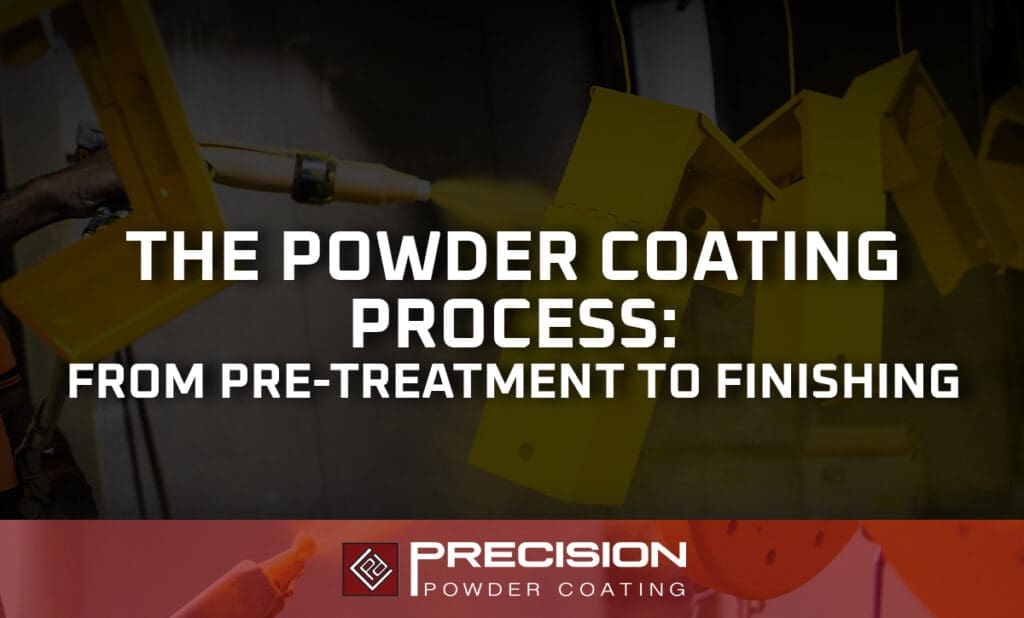
Once the metal is prepped and treated, the actual powder coating process begins. Powder coating is applied using an electrostatic spray gun that charges the powder particles as they exit the gun. The grounded metal part attracts the charged powder, allowing it to adhere evenly to the surface.
This electrostatic attraction ensures consistent coverage, even on complex shapes or hard-to-reach areas. Unlike liquid paint, powder coating does not drip or run, resulting in a uniform coating thickness that enhances both appearance and performance.
Step Four: Curing the Coating
After application, coated parts are moved into a curing oven. During curing, the powder melts, flows, and chemically crosslinks to form a hard, durable finish. Temperature and cure time are precisely controlled to ensure the coating reaches its full strength and performance characteristics.
This curing phase is what transforms loose powder into a tough, long-lasting finish that resists chipping, abrasion, corrosion, and environmental exposure. Proper curing is essential — under-curing or over-curing can negatively impact coating integrity.
Step Five: Cooling and Inspection
Once cured, parts are allowed to cool before inspection. Quality control is a crucial aspect of the professional powder coating process, particularly for manufacturers producing large volumes or components with stringent specifications.
Inspections typically include checks for coating thickness, consistency of coverage, adhesion, and visual appearance. Any issues are identified and addressed before parts move on to packaging, storage, or delivery. This attention to detail ensures clients receive finished parts that meet performance and aesthetic standards every time.
Why the Powder Coating Process Matters for Manufacturers
Understanding the powder coating process helps manufacturers appreciate why professional powder coating delivers better results than shortcuts or incomplete systems. Each step — from preparation to curing — contributes directly to durability, consistency, and long-term value.
A properly executed powder coating process reduces rework, minimizes maintenance, and enhances product reliability. It also ensures repeatable results across large production runs, which is essential for OEMs, fabricators, and commercial manufacturers.
Precision Powder Coating: Built for Commercial and Industrial Projects
Precision Powder Coating brings expertise, equipment, and process control together to deliver high-quality results for commercial and industrial clients. With advanced surface preparation capabilities and a carefully managed powder coating process, we are equipped to handle everything from large fabricated parts to ongoing production orders.
Our team understands the demands of manufacturing schedules, quality requirements, and performance expectations — making us a reliable partner for businesses that need consistent, professional finishing.
Request a Bid for Your Powder Coating Project
If your business depends on durable, high-performance finishes, the quality of your powder coating process matters. Whether you’re coating industrial components, fabricated assemblies, or high-volume production parts, Precision Powder Coating has the experience and capacity to deliver.
Contact Precision Powder Coating today to request a bid and discuss your project requirements. Our team is ready to provide a professional powder coating solution tailored to your commercial needs.
Posted Under: Insights